Marine · Seals, dolphins & whales
Seals, dolphins and stranded marine life
The first 60 seconds
- Leave it if
- Seals haul out on land routinely to rest, digest and moult.
- Help now if
- Visible wounds, or tangled in netting or plastic.
Do this
- Stay 100 metres back
- Observe and note
- Ring BDMLR
Never: push or drag a seal back into the sea. A sick or resting seal put in the water can drown.
A seal on a beach is usually just resting. A dolphin or porpoise on a beach is always an emergency. Here is how to tell what you are looking at, and who to ring.
Rescues across the UK take seals & dolphins
- Handle?
- Never
- Keep back
- 100 metres
- Grey seal pups
- Sep – Dec
- 24h hotline
- 01825 765546
Jump to a section
The one thing to remember
A seal on a beach is usually just resting. Watch from 100 metres before deciding.
Step one
Does it need help?
Look before you touch. Intervening when an animal is fine is one of the most common mistakes — and it can cost the animal its life.
Leave it be if…
- Seals haul out on land routinely to rest, digest and moult.
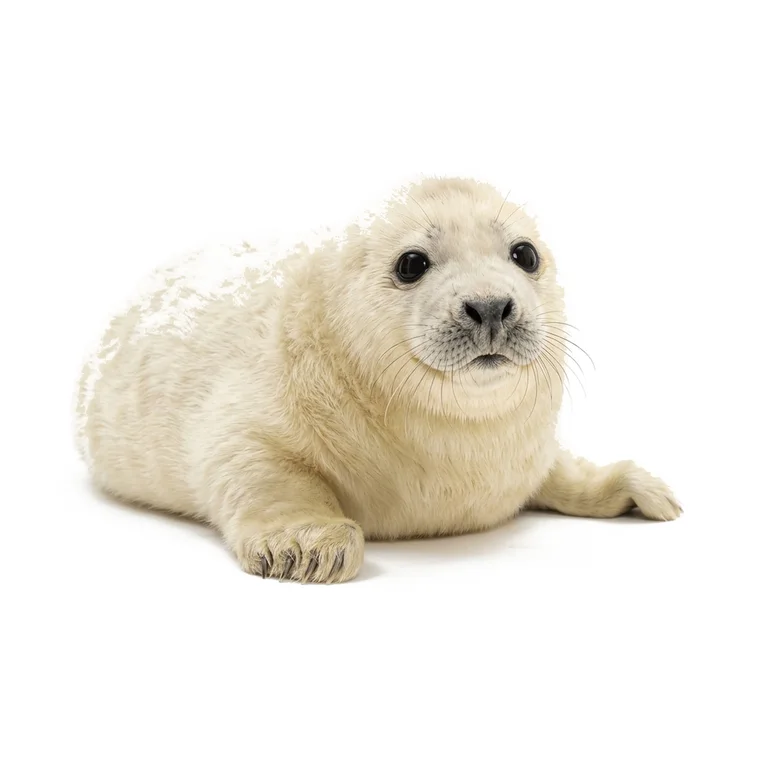
- A white-coated grey seal pup alone on a beach in autumn is normal — the mother is hunting and will come back, but not while people are near it.
Step in if…
- Visible wounds, or tangled in netting or plastic.
- Coughing, wheezing or shivering.
- Thin enough to see a “neck” behind the head, or ribs showing.
- Any stranded dolphin, porpoise or whale — always, immediately.
Step two
First aid, step by step
What to do in the first ten minutes, in order. If anything here feels unsafe, stop, step back and phone a rescue for advice instead.
- 01
Stay 100 metres back
Keep all dogs on leads. Crowding is what stops a mother coming back to her pup.
- 02
Observe and note
Location, size, colour, injuries, and how long it has been there. A photo from a distance helps.
- 03
Ring BDMLR
British Divers Marine Life Rescue runs a 24-hour hotline and has trained marine mammal medics around the coast.
- 04
Stranded dolphin or whale?
Ring immediately. Keep people back, keep the animal upright if safe, and keep its skin wet — but never pour water near its blowhole.
Important
What never to do
- Never push or drag a seal back into the sea. A sick or resting seal put in the water can drown.
- Do not let it bite you — seal bites can cause a nasty infection (“seal finger”) that needs specific antibiotics.
- Do not try to refloat a stranded dolphin or whale yourself.
Food and water
Should I give it food or water?
Never. Seals are wild hunters and do not need or recognise human food.
Seasonal guide
Through the year
When rescues see the most seals & dolphins — and what is driving it.
Busiest in October, November and December.
- January: Busy
- February: Some
- March: Some
- April: Some
- May: Some
- June: Busy
- July: Busy
- August: Some
- September: Busy
- October: Peak
- November: Peak
- December: Peak
- Jun – JulCommon (harbour) seal pups — they can swim within hours.
- Sep – DecGrey seal pupping. Storms separate pups from mothers.
- Winter stormsExhausted pups washed up along the coast.
Background
Seal facts
Two resident seals
Grey seals (long “Roman” nose) and common seals (dog-like face). The UK holds a large share of the world’s grey seals.
Moulting looks sad
Seals lying still and patchy-looking may just be moulting. Disturbance costs them energy they need.
Rescued and released
Rescued pups are often rehabilitated for months, then released with a tag.
Prevention
Help them where you live
- Keep dogs on leads near seal haul-outs and pupping beaches.
- Pick up plastic and fishing net on beach walks — entanglement injuries are horrific.
- Follow local signage about closed beaches during pupping season.
The law. Seals are protected under the Conservation of Seals Act 1970 (England and Wales) and the Marine (Scotland) Act 2010. Disturbing seals at certain designated haul-outs is an offence.
FAQ
Questions people ask
A seal pup is crying on the beach.
Should I pour water on a seal?
Ready to call?
Find a seal rescue near you
Ranked by who has confirmed space, then distance. Free, no sign-up.
General first-aid guidance compiled from UK rescue organisations, not veterinary advice. Where this and a vet disagree, the vet is right.