Bird · Owls, hawks & falcons
Owls and birds of prey: safe handling and first aid
The first 60 seconds
- Leave it if
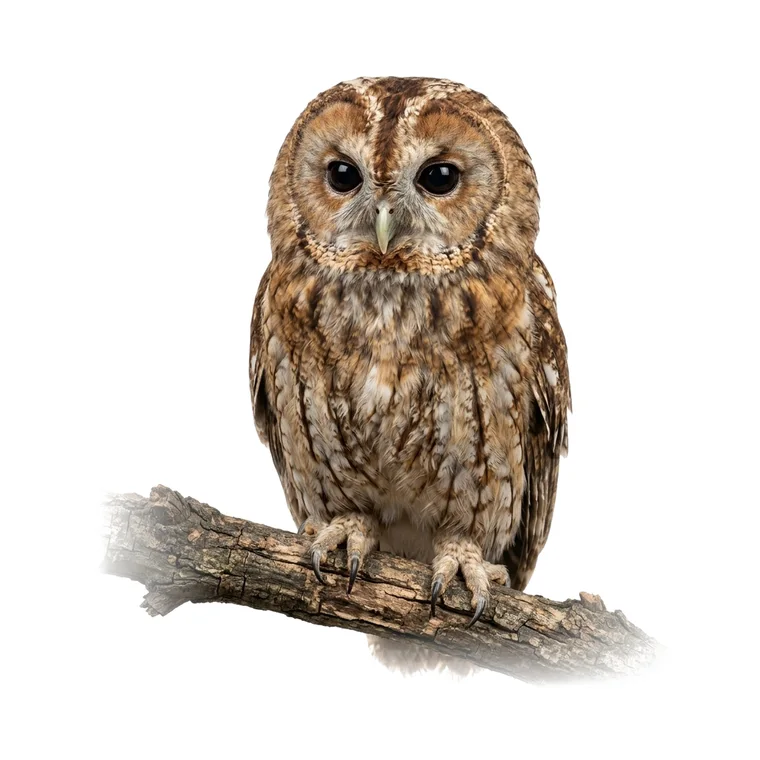
- Fluffy young tawny owls clambering about in branches (“branchers”). They leave the nest before they can fly and their parents still feed them.
- Help now if
- An adult on the ground that cannot fly away when approached.
Do this
- Protect yourself
- Cover the bird
- Secure the feet
Never: hold a raptor bare-handed. Its grip goes through gloves, tendons and bone.
Owls, kestrels, buzzards and sparrowhawks are often found grounded after a road collision or a window strike. They need help fast — but handling them wrongly can hurt you and kill them.
Rescues across the UK take owls & birds of prey
- Handle?
- Only with thick gloves
- Busiest months
- May – Aug
- Main danger to you
- Talons
- Common cause
- Road collisions
Jump to a section
The one thing to remember
Talons, not the beak, are the danger — and handling stress kills raptors.
Step one
Does it need help?
Look before you touch. Intervening when an animal is fine is one of the most common mistakes — and it can cost the animal its life.
Leave it be if…
- Fluffy young tawny owls clambering about in branches (“branchers”). They leave the nest before they can fly and their parents still feed them.
- A bird of prey eating on the ground. It may be reluctant to leave its meal — give it space.
Step in if…
- An adult on the ground that cannot fly away when approached.
- Hit by a vehicle, stunned after a window strike, or caught in netting, wire or fishing line.
- A young owl on a road, path or open ground with no cover nearby.
Step two
First aid, step by step
What to do in the first ten minutes, in order. If anything here feels unsafe, stop, step back and phone a rescue for advice instead.
- 01
Protect yourself
Thick leather gardening or welding gloves, and eye protection if you have it.
- 02
Cover the bird
Drop a heavy towel, coat or blanket over the whole bird. Covering its eyes calms it more than anything else you can do.
- 03
Secure the feet
Through the cloth, take hold of both legs above the feet, and hold the wings against the body.
- 04
Contain it
Move it into a darkened, ventilated pet carrier or sturdy cardboard box with a towel on the floor for grip.
- 05
Leave it alone
Put it somewhere quiet and do not keep checking. Then ring a rescue.
Important
What never to do
- Never hold a raptor bare-handed. Its grip goes through gloves, tendons and bone.
- Do not try to feed it — they are often too stressed to eat and the wrong food causes problems.
- Do not release it yourself “to see if it can fly”. A raptor that cannot hunt starves.
Food and water
Should I give it food or water?
Do not feed. Birds of prey can go a day or two without food. A rescue will decide what and when.
Seasonal guide
Through the year
When rescues see the most owls & birds of prey — and what is driving it.
Busiest in May, June and July.
- January: Some
- February: Some
- March: Some
- April: Busy
- May: Peak
- June: Peak
- July: Peak
- August: Busy
- September: Busy
- October: Some
- November: Some
- December: Some
- Apr – JunTawny owl branchers leaving nests.
- SummerInexperienced juveniles learning to hunt — and hit by cars.
- WinterBarn owls hunting roadside verges in hard weather.
Background
Bird facts
Silent flight
Owl feathers have soft, comb-like edges that muffle sound — which is why barn owls hunt along roadside verges without traffic hearing them, and vice versa.
Capture myopathy
Raptors can die of stress hours or days after handling, even when they seemed fine. That is why minimal handling matters so much.
Escaped falconry birds
A bird with leather straps (jesses) or a ring on its legs is probably someone’s. Rescues and falconry groups can trace owners.
Prevention
Help them where you live
- Keep roadside verges near you long — barn owls hunt there, so mowed verges push them onto the tarmac.
- Barn owl and kestrel nest boxes on farmland make a real difference.
- Never use rodent poison outdoors. Secondary poisoning kills owls and kites.
The law. All birds of prey are protected under the Wildlife and Countryside Act 1981; some (like barn owls and red kites) have extra Schedule 1 protection at the nest. Getting an injured one to care is legal.
FAQ
Questions people ask
Is a baby owl on the ground abandoned?
It seems fine now — can I let it go?
Ready to call?
Find a bird of prey rescue near you
Ranked by who has confirmed space, then distance. Free, no sign-up.
General first-aid guidance compiled from UK rescue organisations, not veterinary advice. Where this and a vet disagree, the vet is right.