Mammal · Six UK species
Deer and fawns: road collisions and when to step back
The first 60 seconds
- Leave it if
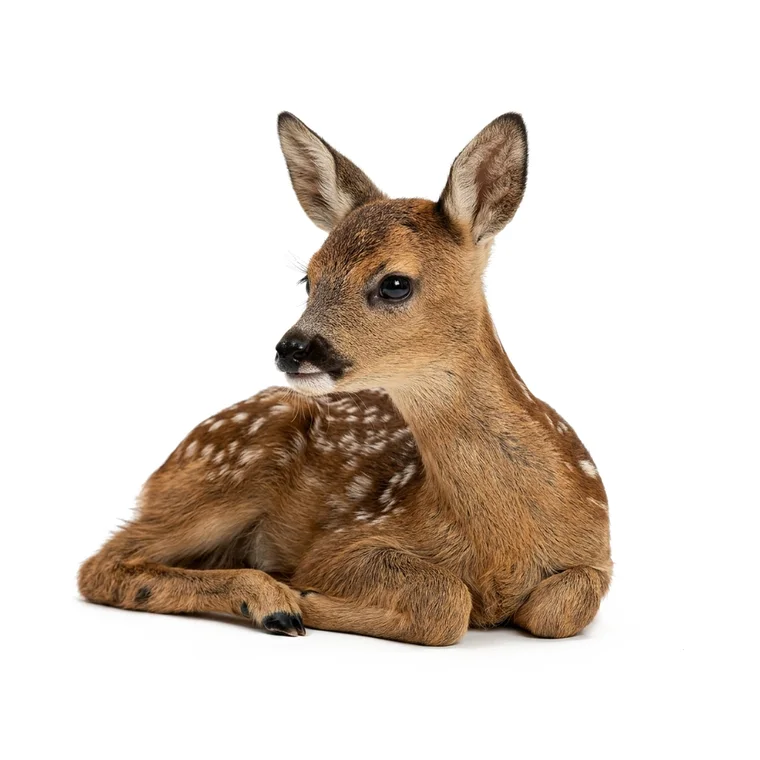
- A fawn or kid lying curled and quiet in grass is not abandoned. The doe leaves it alone for 8–10 hours a day while she feeds.
- Help now if
- A fawn crying continuously, wandering, or lying beside a dead doe.
Do this
- Make the road safe
- Keep back
- Ring a deer-experienced rescue or vet
Never: do not load a deer into a car, boot or footwell, however calm it looks. Hooves and antlers in a moving vehicle cause serious and fatal accidents.
Tens of thousands of deer are hit on UK roads every year. A deer casualty is dangerous to approach and must never go in a car — but a lone fawn in the grass is almost never an orphan.
Rescues across the UK take deer
- Handle?
- Never
- Fawns born
- May – July
- On a road?
- Police 101 / 999
- Collision peaks
- May & Oct – Dec
Jump to a section
The one thing to remember
Never put an injured deer in a car. A concussed deer waking up at speed has killed people.
Step one
Does it need help?
Look before you touch. Intervening when an animal is fine is one of the most common mistakes — and it can cost the animal its life.
Leave it be if…
- A fawn or kid lying curled and quiet in grass is not abandoned. The doe leaves it alone for 8–10 hours a day while she feeds.
- Do not touch a fawn — your scent can make the mother abandon it. Walk away and keep dogs on leads.
Step in if…
- A fawn crying continuously, wandering, or lying beside a dead doe.
- An adult hit by a vehicle, or caught in fencing or netting.
- A deer that cannot stand, or is dragging its legs.
Step two
First aid, step by step
What to do in the first ten minutes, in order. If anything here feels unsafe, stop, step back and phone a rescue for advice instead.
- 01
Make the road safe
Hazard lights on. If the deer is on or near the road, ring the police on 101 — or 999 if traffic is in danger — before anything else.
- 02
Keep back
Stay in or near your car. Keep dogs away and watch from a distance so it does not bolt into traffic.
- 03
Ring a deer-experienced rescue or vet
Deer need sedation and a proper trailer. Tell them the location as precisely as you can (what3words helps).
- 04
Note what you saw
Which way it went, whether it was limping, and the time. If it runs, this helps rescuers find it.
Important
What never to do
- Do not load a deer into a car, boot or footwell, however calm it looks. Hooves and antlers in a moving vehicle cause serious and fatal accidents.
- Do not try to hold one down. Capture stress kills deer more often than their injuries do.
- Do not pick up or move a fawn that is lying quietly.
Food and water
Should I give it food or water?
None. Deer have complex stomachs and the wrong food — especially milk for fawns — is dangerous.
Seasonal guide
Through the year
When rescues see the most deer — and what is driving it.
Busiest in May, June, July and November.
- January: Some
- February: Some
- March: Some
- April: Some
- May: Peak
- June: Peak
- July: Peak
- August: Busy
- September: Some
- October: Busy
- November: Peak
- December: Busy
- May – JulFawns “lying up” in long grass; often wrongly picked up.
- Oct – DecThe rut and darker commutes. Collisions peak at dawn and dusk.
- Year-roundMuntjac are active and on roads in every month.
Background
Deer facts
Six species
Red and roe are native. Fallow, sika, muntjac and Chinese water deer were introduced.
Muntjac bark
The small muntjac makes a loud, dog-like bark, often at night.
Antlers regrow yearly
Males cast their antlers and grow a new set every year.
Prevention
Help them where you live
- Slow down on roads with deer warning signs, especially at dawn and dusk.
- If you see one deer cross, expect others to follow.
- Check fencing and netting for gaps a deer could get its legs caught in.
The law. Deer are covered by the Deer Act 1991 (England and Wales) and the Deer (Scotland) Act 1996. Collisions involving livestock or dogs must be reported to police; deer collisions should be reported if the deer is injured or a hazard.
FAQ
Questions people ask
I hit a deer and it ran off.
I already picked up a fawn.
Ready to call?
Find a deer rescue near you
Ranked by who has confirmed space, then distance. Free, no sign-up.
General first-aid guidance compiled from UK rescue organisations, not veterinary advice. Where this and a vet disagree, the vet is right.